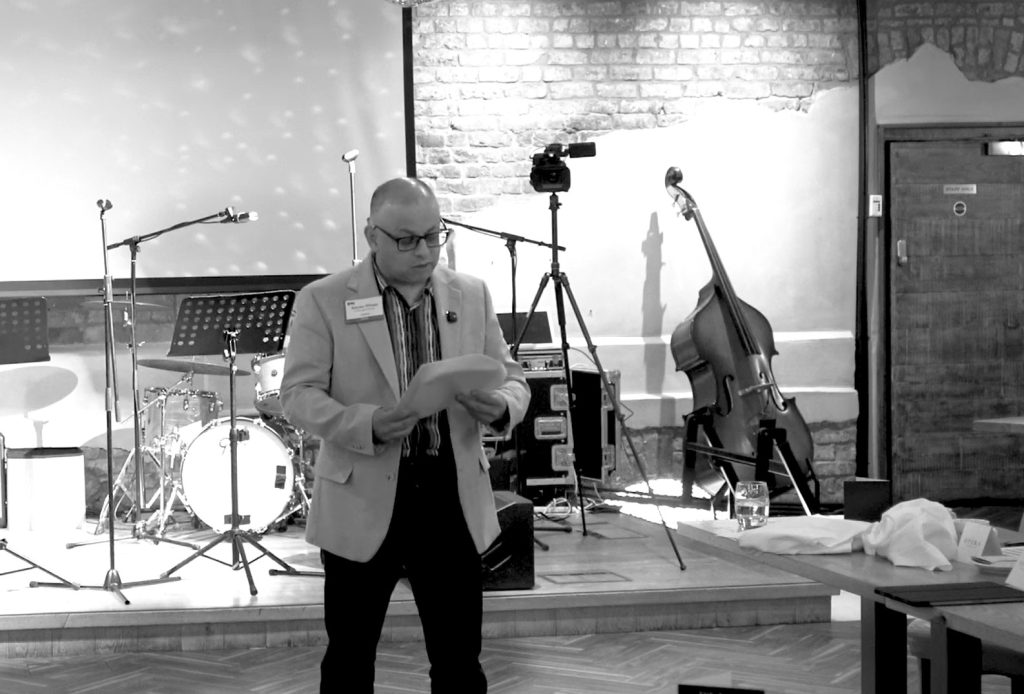
In this engaging BNI Education Slot, Sauren Ghosh explored one of the most important concepts in networking and referral marketing: referability.
Using humour, audience interaction and practical examples, Sauren encouraged members to reflect honestly on how they present themselves professionally and personally within BNI.
He explained that being referable goes beyond simply being good at what you do. Instead, it comes down to the confidence and trust other people feel when recommending you to someone important.
Sauren broke referability down into three key areas. The first pillar focused on appearance and first impressions.
The discussion explored how professionals should present themselves appropriately for their industry, while also demonstrating care, professionalism and energy. Members discussed factors such as dress, attitude, positivity and the importance of creating a strong first impression.
Rather than suggesting everyone should look the same, the emphasis was on being appropriately presented for the type of work you do.
The second pillar explored communication style and language.
Sauren highlighted the importance of speaking clearly, using positive language and avoiding stories that unintentionally create doubt or negativity around a business or service.
He also discussed how repeated negative self-talk, such as constantly saying you are bad at presentations or networking, can become self-fulfilling and damage confidence over time.
The room contributed several examples of how communication shapes perception within networking environments.
The final pillar centred on reliability and consistency.
Attendance, punctuality, follow-up and keeping commitments were all discussed as essential parts of building trust within a chapter.
Sauren used examples from networking culture and WhatsApp group behaviour to demonstrate how even small actions can influence how referable someone appears to other members.
The conversation also explored how networking groups can create stronger business-focused communication cultures by encouraging members to share opportunities, requests for support and collaborative discussions instead of purely administrative messages.
Throughout the session, Sauren reinforced the idea that every interaction contributes to a person’s brand.
Members discussed behaviours that can unintentionally damage credibility, including, turning up late, poor follow-up, inconsistent behaviour, negative language and publicly undermining confidence in their own abilities.
One of the strongest themes throughout the talk was that trust is built through repeated small actions over time.
As the session concluded, Sauren reminded members that BNI is fundamentally built on trust.
While friendships naturally develop within chapters, BNI remains a professional business environment where members are constantly evaluating whether they would feel comfortable introducing someone to an important client, friend, or family member.
The final message encouraged members to focus not only on improving their own personal brand, but also on strengthening the reputation and success of the chapter as a whole.
The session served as a valuable reminder that becoming more referable is often about improving the small, everyday behaviours that shape trust, professionalism and confidence.
Full Transcript
00:25
Would it be okay if I was kind and said things with love today?
Yes?
Okay. As we go through this, have a think about what you could do to be even better than you are — because you’re all amazing anyway, as you’ve qualified for Green Club. Even you, Darren!
For me, when I put this together, it’s all about making yourself more referable by enhancing your brand. You’re all very good at this already, but for all of us there’s always something extra we can be doing.
01:01
Have a think about this:
If I followed you around for a week — in a non-stalking capacity, I better add — would I feel confident referring you to my best client?
Think about that.
For some of you, I’ve already referred you. Dawn and Graeme went to see my sister because, in my eyes, they’re very good at what they do. I had no hesitation putting my sister in front of them.
Do you think you’re 100% referable at the moment?
In BNI, it isn’t about what we do or who we are. It’s about what people say about us when we’re not in the room.
01:57
I believe there are three pillars of referability.
The first is presentation.
What do I mean by that? Appearance. What sort of things about appearance do you think are important when it comes to people being able to refer you?
“How you dress.”
Absolutely. Whether your clothes are clean and ironed.
“First impressions and a smile.”
Exactly. First impressions matter. Energy matters too.
Mike, you’re very high-energy in your meetings — I’ve been to a few and they’re excellent.
Now, I’m going to meet Steve, a plumber from our BNI group, and introduce him to one of my contacts from Italian class because I’m learning Italian.
Do you think Steve will be suited and booted?
“No — dressed appropriately for his trade.”
Exactly. First impressions count, but the right impression for you is what matters.
03:16
The second pillar is communication.
What’s important in communication?
“Clear and concise.”
Yes. Very important.
What about positive language versus negative language?
If I talked about one of my Utility Warehouse customers and all the nightmares they had switching providers — even if I solved the problem — what would people in the room think?
“It sounds like hassle.”
Exactly.
Even when we’re sharing a success story, we need to be careful the story doesn’t create doubt.
I learned something brilliant from our managing director Euan. When people ask me how business is, I say:
“It’s really good — but I could always do with more.”
Otherwise people think you’re too busy and don’t need referrals.
04:58
The third pillar is consistency.
How can we show consistency to fellow chapter members?
“Convey the same message.”
Yes.
“Showing up.”
Absolutely. Reliability matters.
And if you can’t attend, send a sub.
We recently discouraged people from using the WhatsApp group purely to ask for subs. We want the group focused on helping each other grow business.
Constantly saying “I can’t find a sub” doesn’t help your credibility either.
And keeping your word is incredibly important.
05:43
I want you to think about this:
What three words describe the brand you want people to experience from you?
“Results-driven.”
Brilliant.
“Efficient.”
Excellent.
“Professional.”
“Highly skilled.”
“Never gives up.”
Fantastic answers.
These are the things that should come across in your 60-second presentations and open networking conversations.
06:50
Now think about the opposite.
What things do people in your industry do that unintentionally damage their brand?
“Not turning up.”
Exactly.
If someone can’t be bothered turning up to a meeting, are they going to turn up on time for my best client?
We’re all late sometimes, but communication matters.
Someone else mentioned saying you’re bad at presentations.
That’s important too.
If you continually tell yourself you’re bad at something, your brain starts working towards making it true.
07:51
So here’s the question:
What is one thing you could do immediately to improve your referability?
It’s interesting that you talk about the WhatsApp group, because your group might be different, but in ours we don’t get huge amounts of people talking about their businesses. We get things like birthday messages or LinkedIn posts.
It would be interesting to think about whether there’s a way the WhatsApp group could work harder for people.
08:26
Yes. We’re trying to change the culture, which isn’t always easy.
I was part of another networking group where the only things we were allowed to put into the WhatsApp group were ways we were looking for help and support within our businesses.
It wasn’t just social media posts. It was more like: “I’ve just met this person,” or “I’ve just thought of this — does anybody know someone who can help?”
So it becomes more of a referral vehicle.
08:51
Yes, interesting. So, some common themes to highlight are turning up late, poor follow-up, negative language, and inconsistent energy.
There’s someone who regularly subs for our chapter, and we’ve actually told him to arrive early because he often turns up late.
He once arrived in the middle of one of my education slots and sat in my chair. Darren had positioned the camera over that chair, so unfortunately this person sat right in shot.
It reminded me of those old camcorder videos people used to record in cinemas, where heads were bobbing up and down in front of the screen.
We are trying to help this person, but their brand is becoming: “They won’t turn up on time for your important appointments.”
09:40
Small daily improvements can make a massive difference.
As I bring this to a close, I want everyone to think carefully about how they show up.
Even though networking groups are friendly, BNI is still a business organisation.
People are constantly asking themselves internally:
“Would I refer this person to my mum?”
That’s the real test.
10:20
In BNI, we don’t just pass referrals — we pass trust.
In my Utility Warehouse business, I always say I simply want to show people what I do. If it’s right for them, great. If not, that’s okay too.
It has to be win-win.
As you move forward, think about how you can improve not only your own brand, but also the brand of the chapter as a whole.
Because when everyone around you gets more business, the entire chapter benefits.
And that’s what BNI is all about — helping members make more money.
Thank you for listening.


 Subscribe for the latest BNI Education Slots